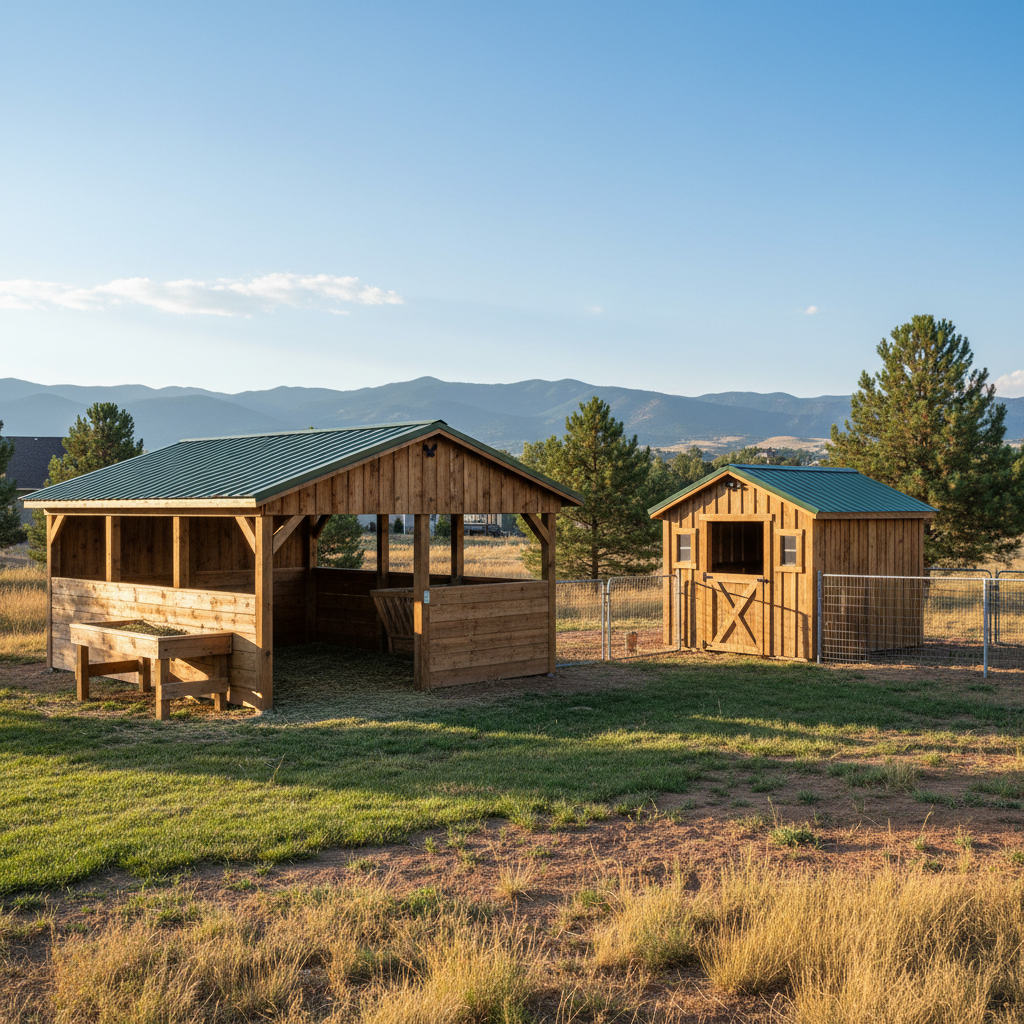
So, you've got horses, goats, or maybe some alpacas out here in Parker, and you're thinking about getting them a proper shelter. Good call. Our Colorado weather can be brutal – scorching sun in the summer, heavy snow in the winter, and those sudden hail storms that pop up out of nowhere. A good shelter isn't just a luxury; it's essential for your animals' health and well-being. But what's it actually going to cost you?
What Drives Livestock Shelter Pricing?
You know how it goes: you ask for a price, and someone says, "it depends." While that's true to an extent, I can break down the main factors that really move the needle on cost. It's not rocket science, but understanding these helps you figure out where your money's going.
- Size and Dimensions: This is probably the biggest one. A 10x12 run-in shed is going to be a lot cheaper than a 12x36 three-sided barn. More material, more labor, bigger foundation. Simple as that.
- Material Quality: Are we talking about a basic metal roof on treated wood posts, or do you want something more robust? Think about the siding – T1-11 plywood, metal panels, or something more durable like SmartSide? The framing itself also plays a role; heavier gauge steel or larger dimension lumber costs more but lasts longer and stands up better to our winds.
- Foundation Type: For most livestock shelters, you're looking at either ground-level skids (often treated lumber) that allow it to be moved, or a more permanent gravel or concrete pad. Skids are generally the cheapest, but a well-drained gravel pad is usually a better long-term solution for animal comfort and hygiene. Concrete is the priciest but offers the most stability.
- Features and Customizations: Do you need interior partitions for separate stalls? A tack room? Hay storage? Vents, windows, specific door types (like a sliding barn door versus a simple walk-through)? Every add-on increases the complexity and the cost.
- Site Prep: Is your site already level and clear, or do we need to do some serious grading, remove trees, or deal with a rocky patch? Here in Parker, especially in some of the older, more rural areas like around Canterberry Crossing, you can hit some pretty tough, rocky soil that takes extra effort to level properly. That's going to add to the labor.
- Permits: Depending on the size and permanence of your structure, you might need a building permit from Douglas County. This isn't usually a huge cost in itself (a few hundred bucks), but the plans and inspections required can add time and administrative fees.
Typical Cost Ranges for Livestock Shelters in Parker
Alright, let's get down to some actual numbers. Keep in mind these are averages for a professionally built, quality structure – not a DIY kit from a big box store, which often won't hold up to our weather long-term.
- Basic Run-In Shed (10x12 to 12x24): For a simple, open-front, three-sided shelter on skids, you're generally looking at $3,500 to $8,000. This would be for something with a metal roof and basic wood or metal siding. Good for one or two horses, or a small herd of goats.
- Medium-Sized Multi-Purpose Shelter (12x36 to 16x48): If you need more space, maybe for several animals, or a sectioned-off area for hay, expect to pay $8,000 to $18,000. This range often includes a gravel pad foundation, better quality siding, and maybe a couple of interior partitions.
- Larger Barns or Custom Structures: For anything larger, with multiple stalls, a dedicated tack room, concrete floors, or more advanced features, the price can easily jump to $18,000 to $40,000+. At this level, you're getting into more custom design work and heavier construction.
These prices typically include materials, labor for construction, and basic delivery/installation on a prepared site. They don't usually include extensive site work like major grading or rock removal, or specific utility hookups if you're adding lights or water.
What Should a Quote Include?
When you get a quote from a local builder, make sure it's clear and detailed. You want to see:
- Detailed breakdown of materials: What kind of lumber, siding, roofing? Gauge of metal?
- Foundation specifics: Skids, gravel pad (depth, type of gravel), or concrete slab (thickness, rebar?).
- Dimensions and design: Clear drawings or descriptions of the layout, height, and openings.
- Labor costs: How many days, how many crew members?
- Site preparation: What's included? Is leveling part of it, or do you need to handle that separately?
- Permit responsibility: Who pulls the permit? Are the fees included?
- Warranty information: What kind of guarantee do they offer on their work and materials?
- Total cost: Obviously, the final number, with no hidden fees.
At Parker Shed Solutions, we make sure our quotes are transparent. You'll know exactly what you're paying for and why.
How to Avoid Overpaying for Your Livestock Shelter
Nobody wants to get ripped off, especially when you're investing in something important for your animals. Here are a few tips to make sure you're getting a fair deal:
- Get Multiple Quotes: This is a no-brainer. Talk to at least three different reputable builders. Don't just go with the cheapest; compare what's included in each quote. Sometimes a slightly higher price means better materials or a more experienced crew.
- Be Specific About Your Needs: The more vague you are, the more room there is for miscommunication and unexpected costs. Know your desired size, features, and even material preferences before you start getting quotes.
- Check References and Reviews: Ask for past customers you can talk to. Look up online reviews. A good local builder will have a track record of satisfied clients.
- Understand the Foundation: This is a critical component that often gets overlooked. A cheap foundation can lead to big problems down the road. Make sure it's appropriate for our climate and your soil type.
- Don't Be Afraid to Ask Questions: If something in a quote isn't clear, ask. A good contractor will be happy to explain everything.
Investing in a quality livestock shelter is a smart move for any animal owner in Parker. Do your homework, get clear quotes, and you'll end up with a structure that protects your animals for years to come without breaking the bank.